
SYNOPSIS
In 1970, Japanese robotics engineer Masahiro Mori described the “uncanny valley” phenomenon. It refers to the observation that the acceptance of human-like, technically generated figures does not increase linearly with their similarity to humans, but drops abruptly in a certain range. Accordingly, highly abstract, clearly artificial figures often appear more familiar and appealing than those that are designed to be particularly human.
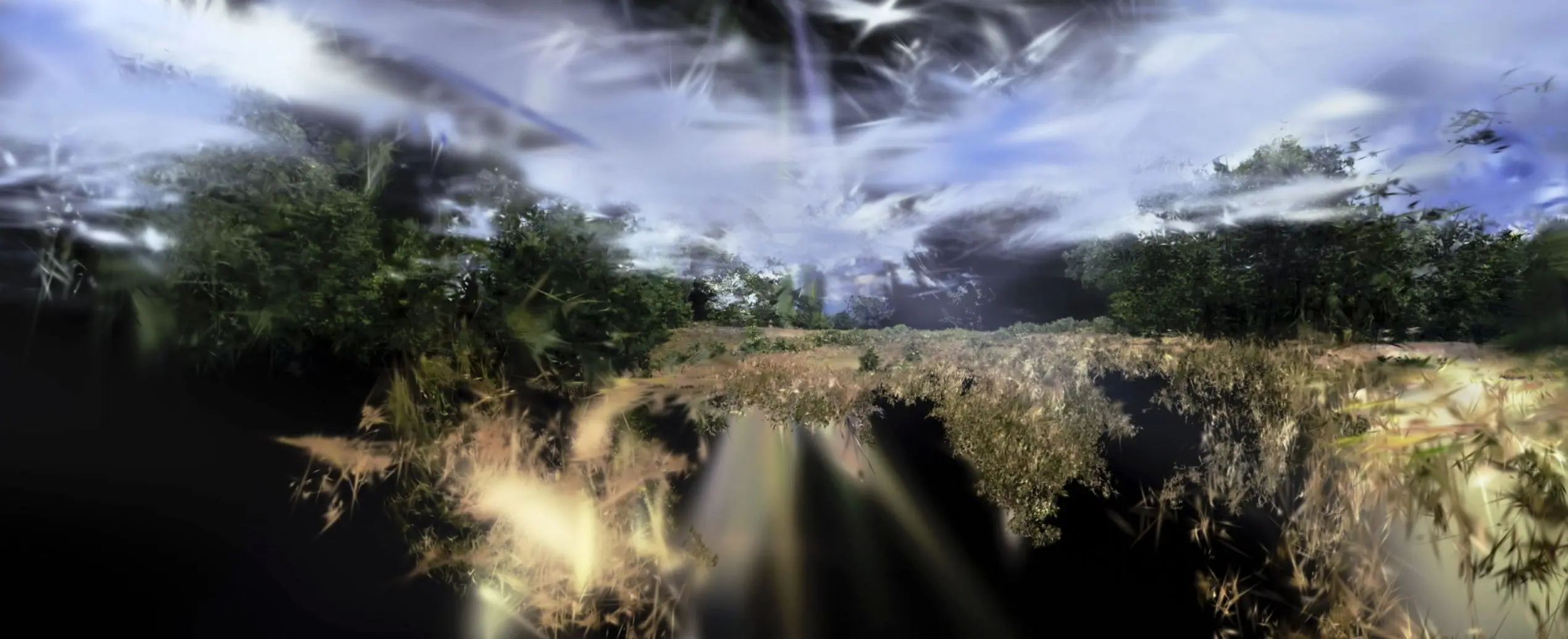
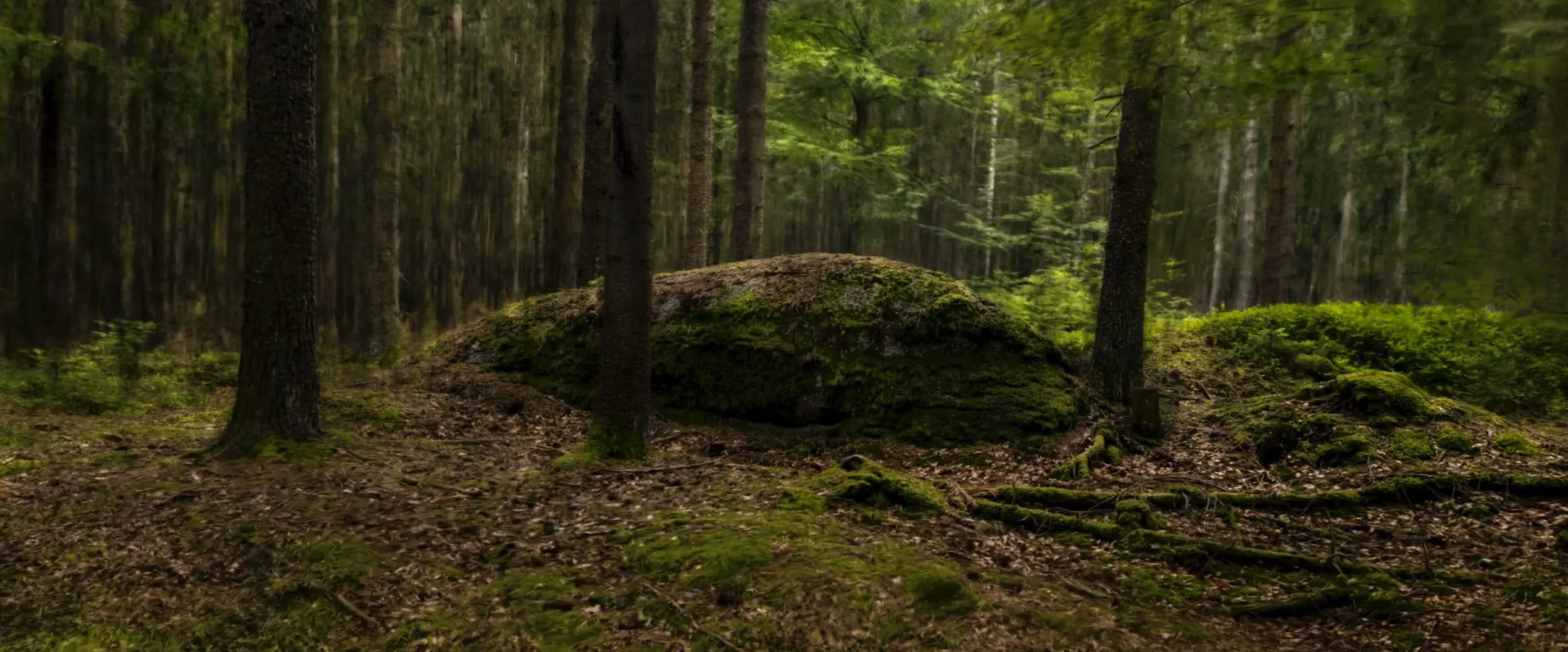
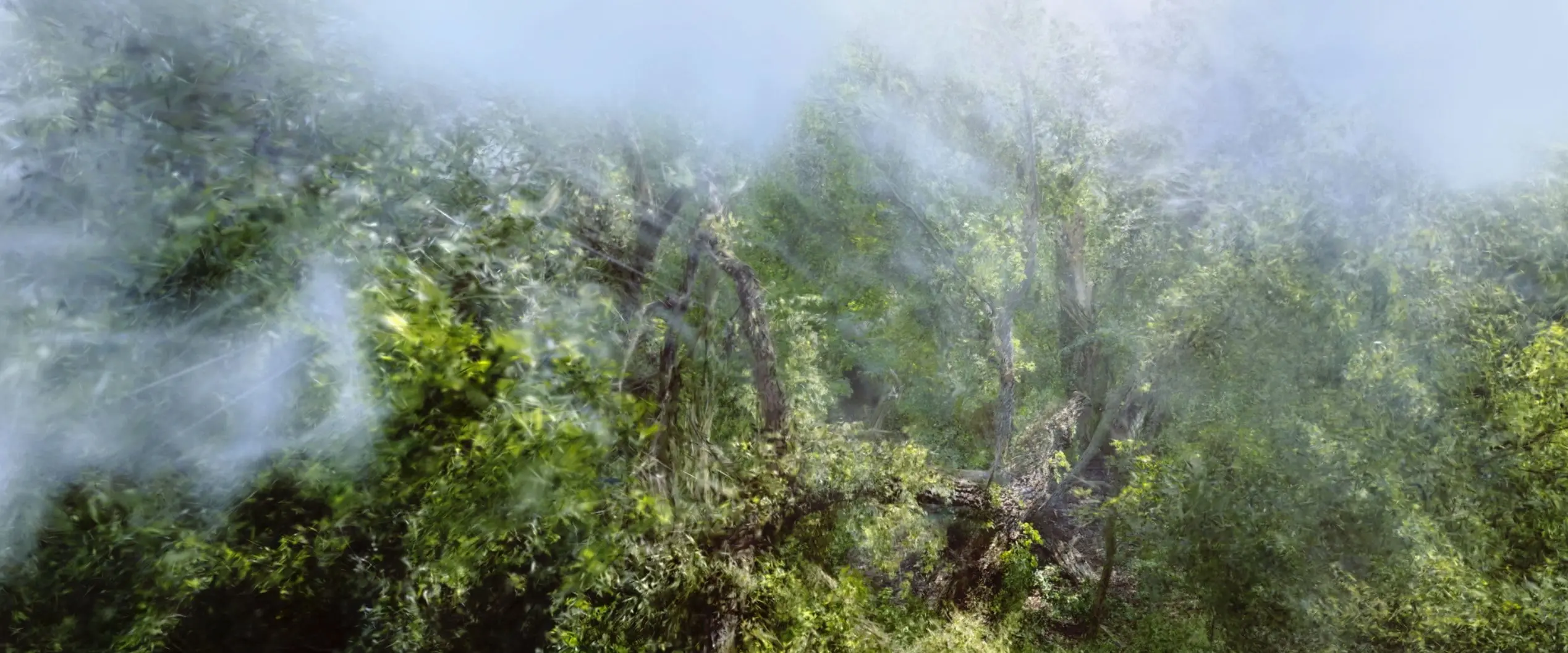
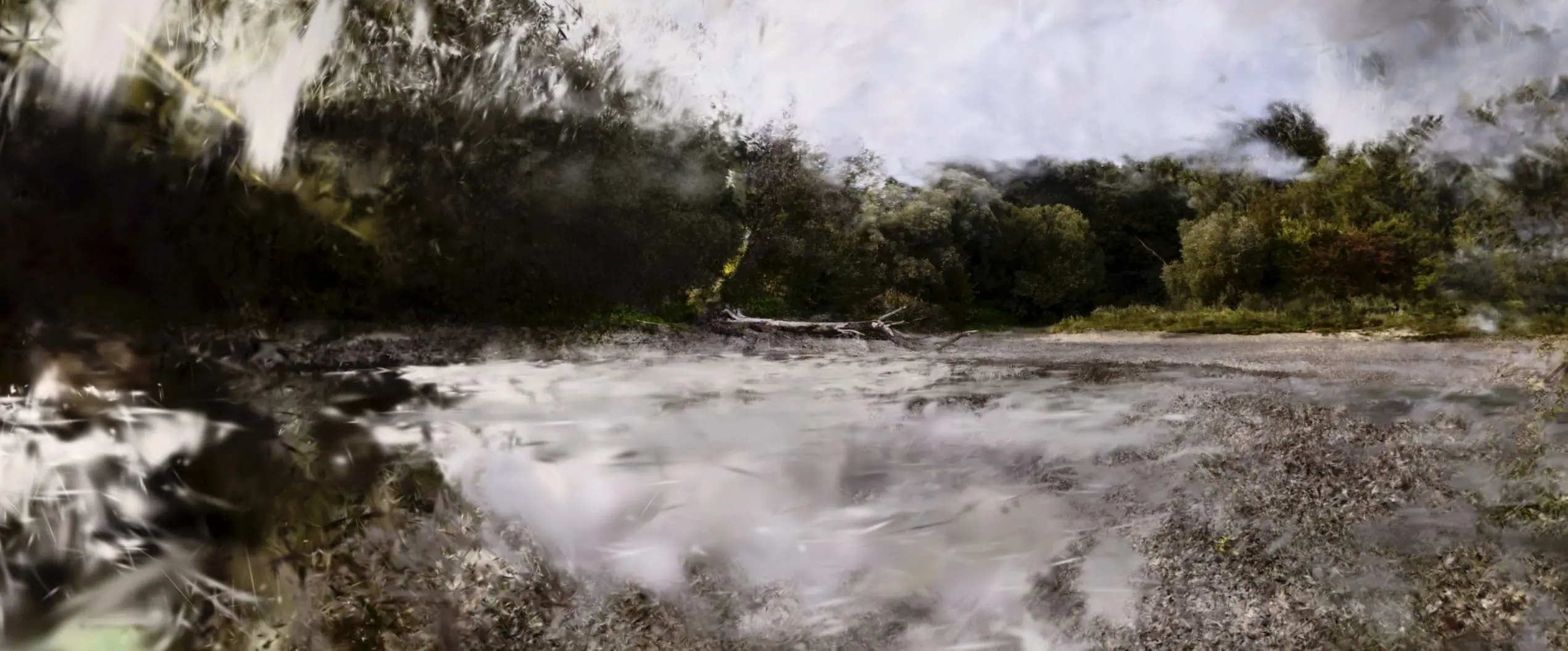
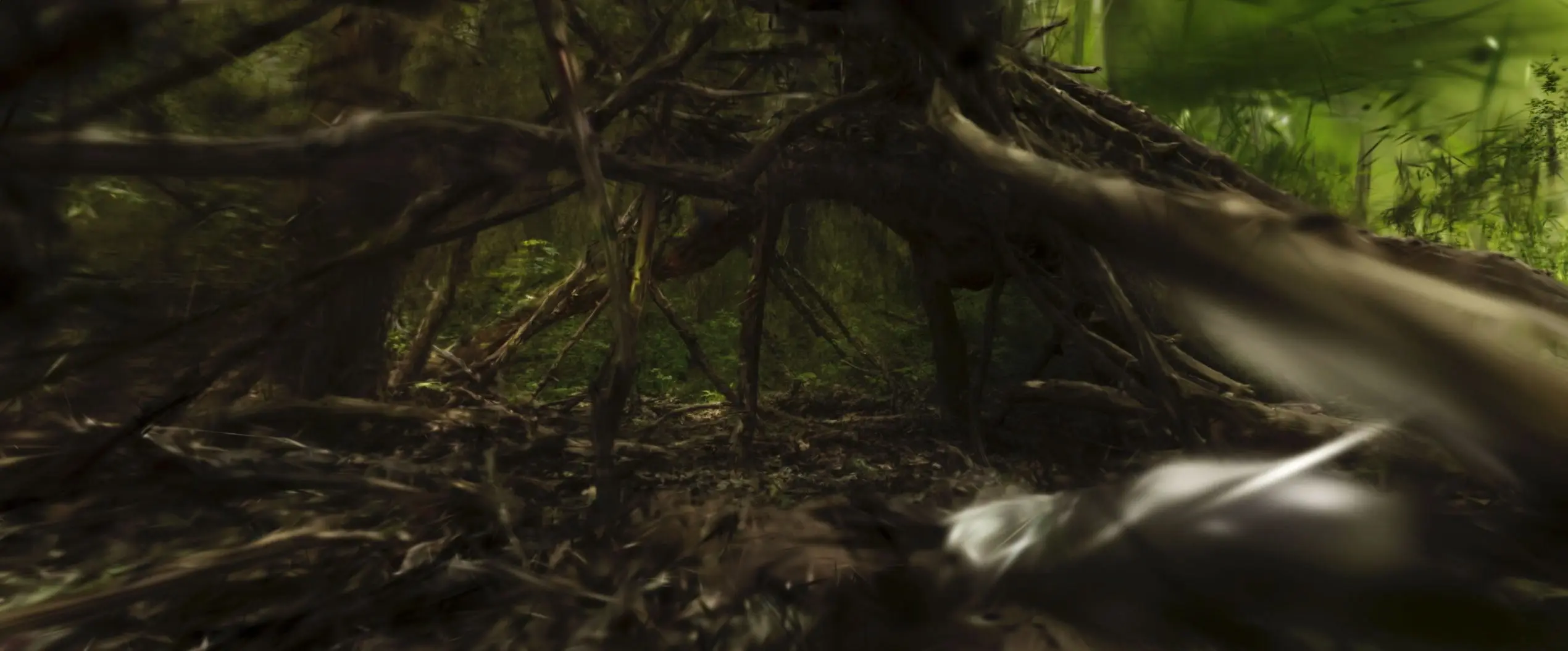
The film The Uncanny Valley transfers this idea to virtual spaces and examines them as possible places of longing and refuge. The technology used creates irritations and disturbances that question both the nature of the spaces and the human quest for substitute worlds. The viewer encounters fragmentary, paradise-like landscapes that are deserted and in which time can only be experienced through the movement of the camera—an invasive intervention that seems to dissolve nature as it approaches. Dystopian sound collages accompany these visual explorations and raise fundamental questions about our place in the world.
For the cinematic adaptation, three-dimensional point clouds are generated from thousands of photographs, which serve as the basis for the film material. A virtual camera can move freely within these spaces. Incomplete areas are supplemented using AI, creating artifacts that have their own materiality and a flawed aesthetic similar to analog film stock.
The Uncanny Valley raises the question of how the perception of virtual places of longing changes when gaps, errors, and algorithmic interventions shape the morphological structure of the landscapes. By exploring the balance between control and chance, the film opens up a space for reflection on the relationship between reality, simulation, and human perception.
TEAM/ Credits
The virtual archive of yearning
Reiner Riedler and Leonard Weydemann
Music: Martin Rigo
Rendering: Bernhard Hochenauer